When to Reseal Stamped Concrete
Stamped concrete needs resealing to stay protected — but the timing isn't always obvious. This guide covers the signs of sealer wear, how to assess your slab, sealer compatibility, and when it's worth calling a professional.
When It's Time to Reseal
As a rule of thumb, stamped concrete is resealed roughly every 2 to 3 years. But that number shifts with Colorado's sun, freeze-thaw cycles, de-icing salts, and how much foot or vehicle traffic the surface sees. The more reliable approach is to watch for the signs of sealer wear rather than resealing on a fixed schedule.
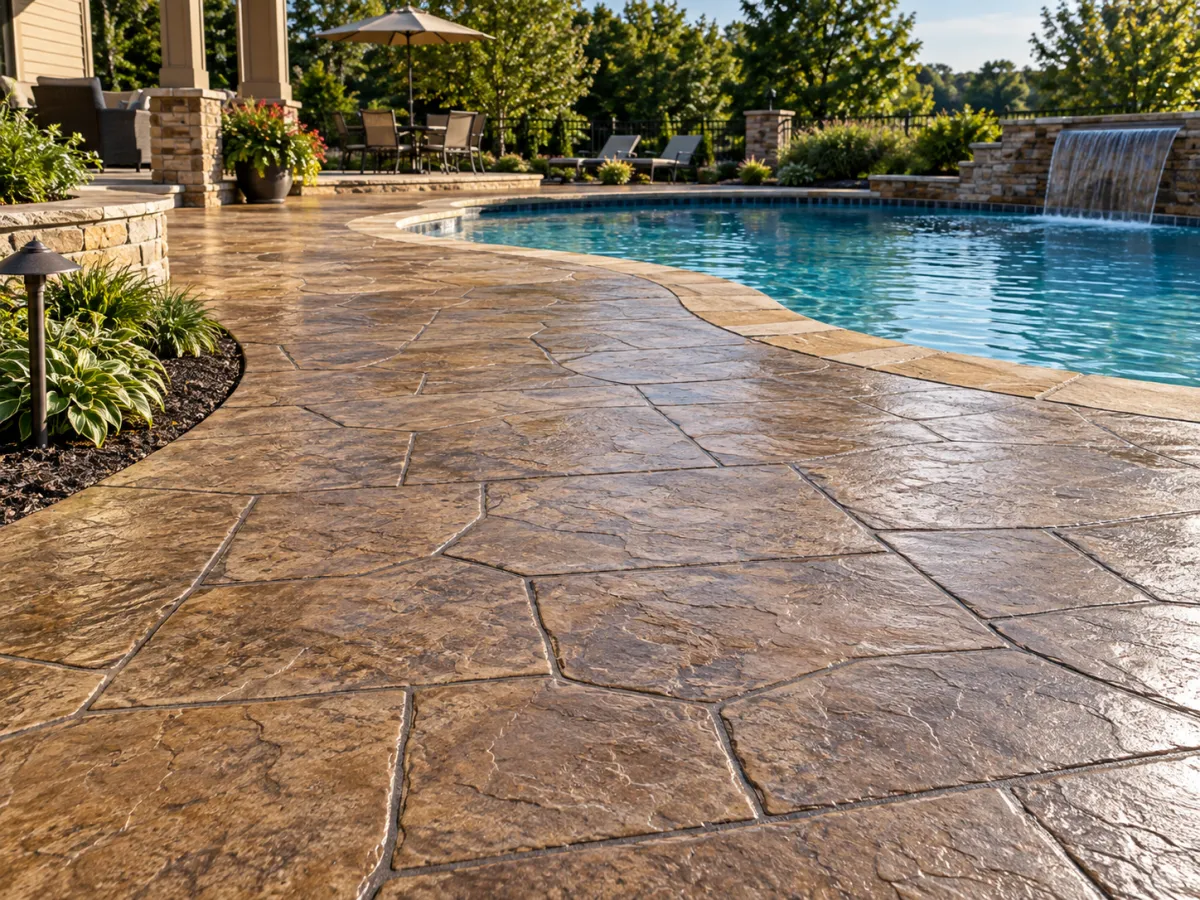
When the sealer is doing its job, water beads on the surface and the color looks rich and even. When it starts to fail, the concrete loses that protection — and that's when resealing is due.
Signs Your Stamped Concrete Needs Resealing
Look for these common indicators:
- Water no longer beads — it soaks in, meaning the protective layer is gone.
- Fading or dull color — the surface looks chalky or washed out compared to protected areas.
- White clouding — moisture trapped beneath an old or over-applied sealer.
- Visible wear in traffic paths — the sealer has worn thin where people or tires travel most.
- Cracks or surface damage — exposure and freeze-thaw have started to affect the slab itself.
Evaluating the Existing Sealer
Before resealing, we assess what's already on the concrete. A new sealer only performs if it's compatible with — and able to bond to — what's underneath. If the existing sealer is peeling, flaking, or cloudy, applying fresh sealer over the top traps the problem rather than fixing it.
We also check the slab for cracks, drainage issues, and freeze-thaw damage. Resealing protects the surface; it doesn't repair structural problems. If the concrete needs deeper attention, we say so before recommending a reseal.
Sealer Product Compatibility
Not all sealers play well together. Applying a water-based sealer over a solvent-based one — or vice versa — can cause bubbling, peeling, or clouding. The existing product has to be identified or, where that isn't possible, removed so a fresh system can bond cleanly.
For exterior stamped concrete in Colorado, we typically use UV-stable acrylic or urethane sealers suited to sun and freeze-thaw exposure. The right product depends on the slab, the old sealer, and how the surface is used.
Ongoing Care Between Reseals
Between reseals, keeping the surface clean extends the sealer's life. Sweep debris, rinse with water, and avoid harsh de-icing salts where possible. Reapplying a fresh coat before the old one fully fails is far cheaper than stripping a failed sealer and starting over.
If you're seeing the warning signs above, it's worth scheduling an assessment. Our stamped concrete resealing service handles the evaluation, preparation, and resealing in one project.
Frequently Asked Questions
Get a Free Resealing Assessment
Not sure whether your stamped concrete is due? Tell us about the surface and what you're seeing, and we'll schedule a free on-site assessment across Colorado.
Call +1 719-301-8996GET YOUR FREE ESTIMATE
Request a free quote for concrete coating and finishing in Colorado.